 19
19In Brazil, whoever builds a building answers for 5 years, a period no contract can shorten, for the soundness and safety of what was delivered, including the ground it stands on (Civil Code, art. 618).
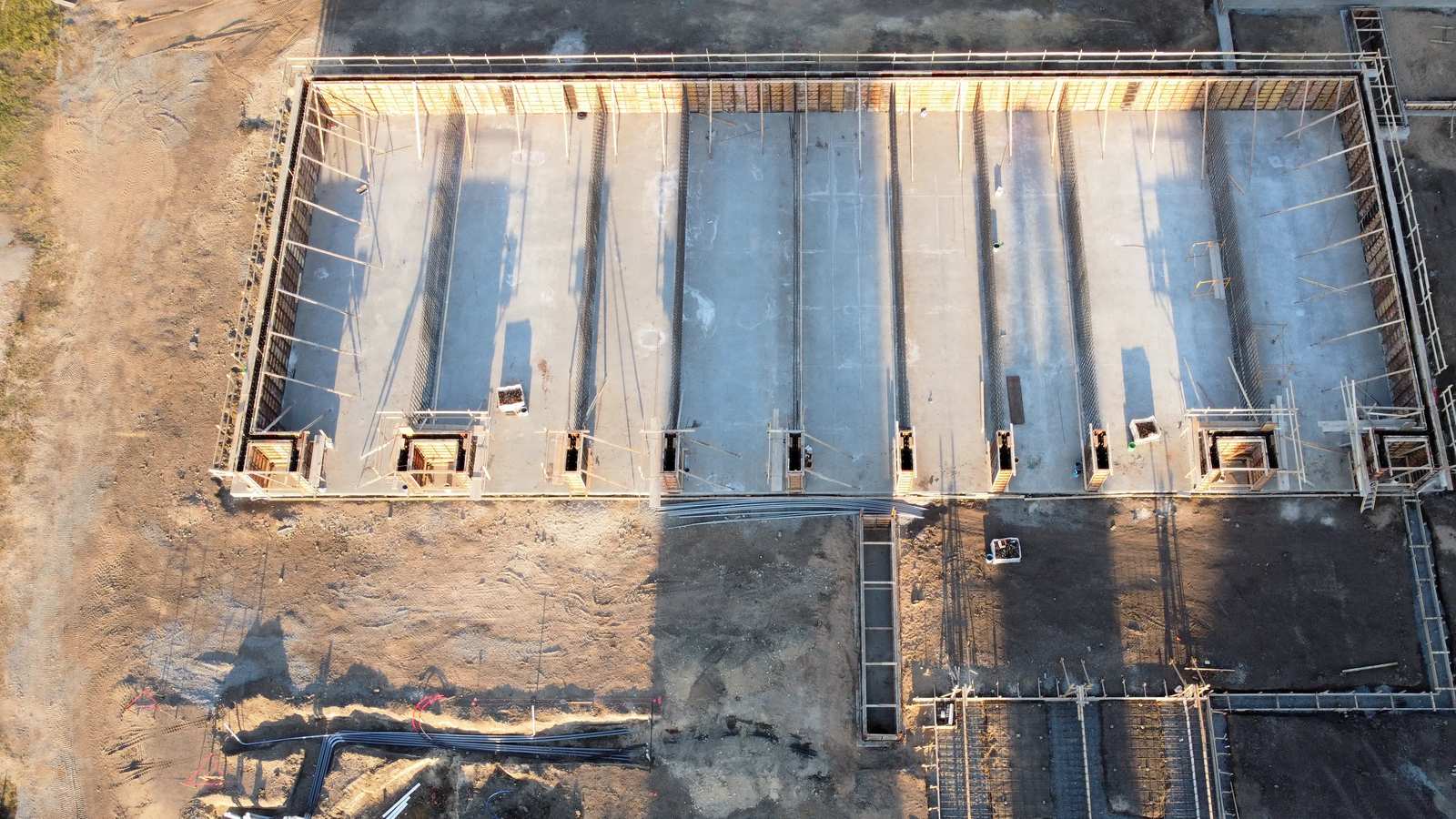
Between the signing of the contract and the end of that period, someone has to make sure every site of the construction company finishes on time, on budget, with quality and without accidents. That person is the COO, chief operating officer, the operations director.
This text describes the seat from the side of whoever executes: production, in-house crews and subcontractors, safety on site, quality and execution contracts. The reading is C&S Engenharia's, marked as such; the laws cited appear in the references at the end.
A construction company sells a promise: this building, with this specification, for this price, by this date. The budget that won the tender becomes, the next day, a production budget, with crews, materials and a sequence of tasks.
The COO answers for the gap between the two. If production costs more than the budget sold, the margin disappears. If it takes longer, the contract charges for it. If it is badly done, the guarantee period charges for it later.
The seat has four variables: time, cost, quality and safety. None of them resolves itself. Haste without planning creates rework and accidents; a poorly chosen saving creates defects; excessive caution creates delay.
In C&S Engenharia's reading, the COO's job is to keep the four in balance on every site at the same time. A site that delivers on time because it took the best crew from another site has solved nothing: it has only moved the delay to a new address.
Each site has its technical lead. Every contract to carry out engineering works is subject to the Technical Responsibility Record, the ART, which "defines, for legal purposes, the technical leads of the project"; failing to file it exposes both professional and company to a fine (Law 6,496/1977, arts. 1 to 3).
The resident engineer commands his or her site. The general coordinator follows time, progress and risk across all sites and raises the alarm when something leaves the curve. The site administrator runs the back office: documents, staff, controls, routine purchases.
The COO arbitrates what cuts across sites: the crew that moves from one site to another, the equipment serving two fronts, the order of priority when material is late, the subcontractor that stops being called.
Above the COO, the CEO runs the whole construction company and the execution of the whole. In structures that have a CVO seat, that seat looks after the long term and the course: which kind of work to pursue, in which regions, with what portfolio risk. The COO does not choose the course; the COO executes and delivers within it.
This does not create a rigid border. In many construction companies the CEO is also a partner and answers directly for some sites; on those, the COO keeps supporting with crews, equipment, supply and indicators, without taking over the responsibility that belongs to the CEO.
| Decision | Who takes it | Why |
|---|---|---|
| Sequence of the week's tasks on a site | Resident engineer | Knows the front, the crew and the ground |
| Warning of a deviation in time or progress | General coordinator | Sees all sites in the same picture |
| Moving a crew or equipment between sites | COO | The decision improves one site at the expense of another |
| Dropping a subcontractor from the approved list | COO | It affects contracts, deadlines and risks on several sites |
| Whether to bid for a new kind of work | Board, within the set course | It changes the portfolio, not the execution |
Before the first pile, the COO reads the contract the way one reads a map of risks. The Civil Code starts with the basics: the contractor may contribute only labour or labour and materials, and the obligation to supply materials is not presumed (Civil Code, art. 610).
The choice changes the risk. When the contractor supplies the materials, the risks are the contractor's until the works are handed over (art. 611). Material stolen, soaked or broken on site is the construction company's loss.
The price has rules too. In a development built under a construction contract, the price may be fixed, with no adjustment "regardless of the variations in the actual cost of the works", or adjustable by indices set in the contract (Law 4,591/1964, art. 55). And the contract must state the delivery date and the conditions for extending it (art. 48, § 2).
Design changes are charged in writing. A contractor executing works under an accepted plan may not demand a higher price for changes, unless they result from the owner's written instructions (art. 619 of the Civil Code). In C&S Engenharia's reading, a verbal order on site becomes paper the same day.
Finally, stopping has a price. If the works are suspended without just cause, the contractor is liable for losses and damages (art. 624). The law allows suspension for the owner's fault, force majeure, unforeseeable geological or water-related difficulties or changes out of proportion to the design (art. 625). The COO knows which case applies before ordering a stop.
The calendar warns late. When the date of a stage passes, the delay has already happened. Productivity warns early, because it measures pace while the task is still under way.
The arithmetic is simple: quantity of finished work divided by the crew hours spent. Square metres of masonry per hour, cubic metres of concrete per day, installation points per week. Compared with the target in the production budget, it tells whether the crew will meet that task's deadline.
The COO does not follow every task with the same attention. The COO follows the critical path of each site, the chain of tasks in which each lost day pushes back delivery. The rest has slack.
Planning works on three horizons. The physical and financial schedule covers the whole site and matches progress with spending. The medium-term plan looks at the coming weeks and clears what each task needs to start: drawings, material, crew, a free work front. The weekly plan distributes the work and, the following week, measures how much of what was promised was done.
That last number, the share of the weekly plan completed, is the site's most honest thermometer. In C&S Engenharia's reading, when it falls two weeks in a row, the problem is rarely the crew: it is the release of work fronts, which medium-term planning should have secured.
The measurement is the moment the site turns into money. For works determined by measure, the contractor is entitled to have them checked by measure and to be paid in proportion to what was executed (Civil Code, art. 614).
The law sets two presumptions. "Everything that was paid is presumed verified" (§ 1). And what was measured is presumed verified if, within 30 days of the measurement, the owner or the owner's inspector does not point out defects (§ 2).
Once the works are completed as agreed, the owner must accept them. The owner may reject them if the contractor departed from the instructions, the plans or the technical rules (art. 615), or accept them with a price reduction (art. 616).
For the COO, this sets the routine. The internal measurement, done by the construction company itself, comes before the client's measurement and uses the same criteria. Work that would not pass inspection does not go into the spreadsheet.
The approved measurement feeds the cash flow, and the CFO depends on it to know how much comes in, when, and how much is withheld. A late measurement on site is late money in the treasury.
A large part of a construction company's production comes from subcontractors: formwork, rebar, building services, plasterboard, painting. The law does not leave that production outside the builder's account.
In a subcontract, the subcontractor answers for the labour obligations towards its own employees, but those employees may claim against the main contractor if they are not paid. The construction company may recover the amount later and retain sums owed as a guarantee (CLT, art. 455).
In outsourced services, the hiring company is secondarily liable for labour obligations during the contract period and must ensure safety, hygiene and healthy conditions when the work takes place on its premises or at an agreed location (Law 6,019/1974, art. 5-A, §§ 3 and 5).
For social security contributions, joint liability is explicit: owner and developer with the builder, and the builder with the subcontractor, with no benefit of order (Law 8,212/1991, art. 30, VI).
Safety follows the same path. Each contracted company gives the hiring company the inventory of the risks of its own activity, which goes into the site programme (NR-18, item 18.4.4). And the hiring company's programme includes the prevention measures for contractors working on its premises (NR-1, item 1.5.8.1).
In C&S Engenharia's reading, the COO treats the subcontractor as an extension of the in-house team. It is chosen on its record of deadlines and safety, not on price alone. Documents and payments are checked before each payment. And its productivity is measured with the same criteria as the in-house crew.
The law puts safety in the company's name. "The company is responsible for adopting and using collective and individual measures for the protection and safety of the worker's health" (Law 8,213/1991, art. 19, § 1). It must comply with the rules, enforce them and instruct employees through work orders; employees must observe them (CLT, arts. 157 and 158).
NR-18 opens with two entry obligations. Whoever organises the works must bar workers from entering or staying on site without the required protection measures, and must give prior notice of the works to the labour inspectorate before activities begin (item 18.3.1).
The central instrument is the Risk Management Programme, the PGR, mandatory on construction sites (item 18.4.1). It contains the risk inventory and the action plan (NR-1, item 1.5.7.1) and, in construction, documents of its own: the design of the welfare area, the electrical design of temporary installations, collective protection designs, fall protection systems where applicable and the list of personal protective equipment (NR-18, item 18.4.3).
The PGR keeps pace with the stage of the works (item 18.4.3.1), and the risk assessment is reviewed every two years or whenever processes change, measures prove ineffective or an accident occurs (NR-1, item 1.5.4.4.6). The former PCMAT remains valid only until the end of the works where it already existed (NR-18, item 18.17.1).
NR-1 sets the order of measures: eliminate the risk, protect collectively, organise the work and, last, personal equipment (item 1.4.1, g). The guardrail comes before the harness.
An accident has a reporting deadline, the next working day and, in case of death, immediately (Law 8,213, art. 22). If there was negligence regarding safety rules, Social Security recovers from the company what it paid (art. 120, I). In C&S Engenharia's reading, the COO does not delegate safety to the safety technician: the COO gives the technician authority to stop a work front, and backs the stop.
The critical front stops for three reasons: no drawings, no crew or no material. The third is the most avoidable.
Supply management buys for all sites with the lead time the medium-term plan requires. The storekeeper receives, checks quantity and specification, stores and records what goes out to each front.
The COO sets the standards that shape that work. Which materials are bought under annual contracts for all sites. How much lead time each family needs. What tolerance is accepted on receipt and who may refuse a load that is off specification.
In C&S Engenharia's reading, refusing the wrong material at the site gate is a quality decision, not a purchasing one. The block that is off size and accepted today becomes a wall rebuilt in three weeks.
The five-year guarantee for soundness and safety comes with a deadline for the owner to act: 180 days from the appearance of the defect (Civil Code, art. 618, sole paragraph).
When the end buyer is a consumer, the Consumer Protection Code adds the builder's liability for design and construction defects "regardless of fault" (art. 12). A claim for damage is time-barred after five years, counted from knowledge of the damage and of who caused it (art. 27).
The operational reasoning is direct. Each layer of finish multiplies the cost of correcting what lies beneath it. Concealed pipework, waterproofing, reinforcement: all of it is inspected before being covered, with a record of who checked it.
A non-conformity that is found has an owner, a deadline and a recorded cause. In C&S Engenharia's reading, the cause matters more than the fix: the defect that repeats on three sites is a failure of standard, and fixing standards is the COO's job.
The COO takes the board a short dashboard, the same every month, so that comparison makes sense.
With it goes the map of execution risks: what could delay, raise costs or hurt someone in the coming weeks, with an owner and a planned response. The board does not need to know everything; it needs to know in time what changes the result.
The group's developer, IncorpBuilding, describes the same seat from the side of whoever promises the delivery date to the buyer. There, the same schedule becomes quarterly reporting to buyers and lenders.
The example is hypothetical. The assumptions are the author's, chosen to keep the arithmetic simple, and do not describe a real site. A building has 96 apartments. In six of them, a fitting in the concealed plumbing was badly made and will leak.
The question is when the defect shows up: in the test before the wall is closed, after the finishes or after delivery.
| Assumption or result | Test before closing | Found after the finishes | Found after delivery |
|---|---|---|---|
| Apartments with the defect (assumption) | 6 | 6 | 6 |
| Pressure test in all 96 (R$ 60 each) | R$ 5,760 | zero | zero |
| Repair per apartment (assumption) | R$ 250 | R$ 3,200 | R$ 4,700 |
| Repair in the 6 apartments | R$ 1,500 | R$ 19,200 | R$ 28,200 |
| Total | R$ 7,260 | R$ 19,200 | R$ 28,200 |
| Crew days spent on repairs (assumption) | 3 | 24 | 24, with the resident at home |
The arithmetic. Testing all 96 apartments at R$ 60 costs R$ 5,760; fixing six fittings with the wall open, at R$ 250 each, costs R$ 1,500. Total: R$ 7,260.
After the finishes, each repair means opening the wall, replacing the fitting and redoing plaster, tiling and paint: R$ 3,200 per apartment, R$ 19,200 for the six. After delivery, R$ 1,500 is added for mobilisation and repairs to the apartment below: R$ 4,700 each, R$ 28,200 in total.
The preventive test costs 38% of the post-finish repair and 26% of the post-delivery repair. And the calculation leaves out what does not fit in reais: 24 crew days taken from the finishing front, which is usually on the critical path, and the relationship with the client.
The deciding number, however, is another one. The test is paid on 96 apartments to find a defect in six. Had the building a single defective apartment, the test would cost R$ 6,010 (R$ 5,760 plus R$ 250) against R$ 3,200 for the post-finish repair. Even so, C&S Engenharia would keep it: no one knows in advance how many there are.
A separate seat does not always pay for itself. Three situations show the limits of the idea.
First: the construction company has one or two small sites close to each other. The engineer partner follows both, decides allocation and answers for the four variables without needing an extra layer.
Second: the company works only as a subcontractor for a specialised trade, such as building services or steel structures. Operations are the trade itself, and whoever masters it technically already plays the COO's role.
Third: the construction company has a single large, long site with a dedicated contract manager. While it remains the only one, the manager concentrates operations; the seat starts to make sense when the second site begins to compete for crews and equipment.
In none of these cases does the function disappear. Someone still answers for time, cost, quality and safety; the only question is whether that person needs a seat of his or her own.
The resident engineer answers for one site: work fronts, crews, quality and safety on that site, usually under his or her own ART. The COO answers for all sites together and decides what one site cannot decide alone: moving crews, prioritising material, replacing a subcontractor. A good resident does not replace the COO, and the COO does not replace the resident.
It may be. Brazilian labour law gives the subcontractor's employees the right to claim against the main contractor when the subcontractor fails to meet its obligations (CLT, art. 455). The construction company has a right of recourse and may retain sums owed to the subcontractor as a guarantee. For social security contributions, Law 8,212 provides explicit joint liability (art. 30, VI).
Only for works where it already existed before the current wording of NR-18, and until those works end (item 18.17.1). For all others, the required document is the site PGR, drawn up by a legally qualified occupational safety professional, with a risk inventory, an action plan and the designs specific to construction.
The law assigns the company the duty to adopt protection measures (Law 8,213, art. 19, § 1). Whoever holds the formal position of administrator, however, is liable towards the company and third parties for fault in performing that role (Civil Code, art. 1,016). The title of the seat matters less than the formal position and the decisions taken.
For the soundness and safety of the building, five years, a period the contract cannot shorten; the owner has 180 days after the defect appears to file suit (Civil Code, art. 618). Where there is a consumer, the Consumer Protection Code adds no-fault liability for defects and five years to claim compensation.
By Raphael Schifino, CVO
← Back to Articles